


Weatherproof Distribution Box Serviceability By Nante
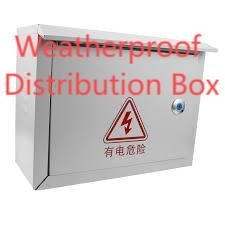
Outdoor electrical installations demand enclosures that do more than shield components — they must actively preserve performance and safety in harsh conditions. In many field sites the Weatherproof Distribution Box sits between exposed cabling and sensitive equipment, and the Weatherproof Distribution Box must be specified to manage moisture, dust, thermal stress, and access control without compromising serviceability. Choosing the right unit reduces downtime, simplifies maintenance, and protects downstream systems from environmental damage.
Practical design priorities for exposed sites
A good outdoor distribution enclosure starts with purpose-driven layout. Prioritize separate zones for incoming feeds, outgoing circuits, and control or communications wiring so interference and heat build-up are minimized. Locate terminal blocks and DIN rails for easy access and future expansion. Doors should open wide enough for comfortable servicing and include captive hardware so small parts are not lost during maintenance. Consider internal mounting bosses for meters, surge arrestors, and monitoring modules during the specification phase to avoid costly retrofits.
Materials, finishes, and corrosion resistance
Material selection determines longevity. Powder-coated steel provides excellent mechanical protection but requires top-quality pretreatment in coastal or chemical environments. Stainless steel (316L where needed) and fiberglass-reinforced polyester are excellent where corrosion is aggressive. For polymer enclosures, verify UV stabilization and temperature ratings; inferior plastics can embrittle and fail with prolonged sun exposure. Surface finishes should resist abrasion and allow straightforward cleaning; sacrificial coatings or cathodic protection are worthwhile in highly corrosive locales.
Mounting, sealing, and thermal strategy
Install the cabinet on a solid, level surface — uneven mounting stresses gaskets and fasteners, reducing ingress protection over time. Use vibration-rated anchors near rotary equipment. Maintain adequate clearance for natural convection; overcrowding internal devices accelerates thermal aging. Where internal heat is expected, add passive vents with insect screens, or fit filtered fans and thermostatic controls. Gland plates and cable entries must be installed with correct torque and sealing techniques so IP ratings remain valid.
Accessories, retrofit paths, and field serviceability
Plan for modularity. Choose enclosures that accept standard accessory modules — surge protection cassettes, battery compartments, prewired terminal harnesses, and telemetry plates — to shorten service windows. A retrofit-friendly design allows technicians to swap a module instead of replacing the whole cabinet. Label mounting holes and provide spare knockout locations so upgrades are straightforward. Keep a compact field kit with replacement seals, common fasteners, and gland seals to expedite repairs.
Standards, testing, and commissioning checks
Verify ingress protection (IP) and, where applicable, NEMA classifications for the intended environment. For installations in hazardous atmospheres confirm ATEX/IECEx approvals. During commissioning perform insulation resistance tests, torque-audit all terminations, and conduct an infrared scan under representative loads to identify hotspots. Re-run thermal scans after several weeks of operation to catch any settling or loosening connections. Proper labelling, documentation, and as-built drawings speed future maintenance and regulatory inspections.
Maintenance routines that extend service life
Scheduled inspections preserve performance. Inspect and renew door gaskets periodically, check fastener torque on visible terminals, and clear drains or breather vents of debris. Replace sacrificial coatings or anodes before corrosion becomes structural. Keep accurate maintenance logs so recurring faults can be traced to design choices rather than repeated repairs. Preventive replacement of suspect seals or degraded hardware is far cheaper than emergency enclosure swaps.
Monitoring, smart features, and surge protection
Adding basic sensors — temperature probes, humidity sensors, and door-status switches — provides early warnings of seal failure or thermal stress. Allocate mounting bosses and wiring channels at procurement to make later integration simple. Use field-replaceable surge modules rated for local transient environments; these allow fast swaps after a major event without extensive rewiring. Remote monitoring reduces site visits and converts intermittent faults into actionable alerts.
Sizing for growth and lifecycle cost control
Specify a cabinet with modest spare capacity for circuits, spare conduits, and telemetry. Oversizing slightly avoids premature replacement when expansion needs arise. Favor reusable assemblies and repairable modules over sealed, disposable designs to minimize lifecycle costs and environmental impact. Standardize on a small set of enclosure families across sites to reduce spare-part complexity and speed technician training.
A well-specified outdoor distribution enclosure is a long-term asset: it prevents moisture-related failures, simplifies service, and provides a platform for upgrades that keep installations resilient. By balancing material choice, thermal design, serviceability, and a pragmatic spare-parts strategy, project teams can secure reliable power distribution for years. For product details, accessory options, and technical support, visit www.nante.com
Категории
Больше
Mark your calendars for November 6th: Netflix welcomes back The Vince Staples Show. Prepare for another round of Vince Staples' darkly comedic navigation through life. His quest for inner peace is ignited by tragedy only to collide relentlessly with echoes from a troubled past. Peek at the chaos in the newly released Season 2 trailer. This satirical vision springs from the mind of rapper and...

The debut season of the Mobile Legends Professional League in Singapore recently concluded with a historic victory for EVOS SG, who emerged as the first champions of the tournament. Following four intense weeks of regular matches, the playoff stage unfolded over the weekend, culminating in a riveting final on Sunday, May 9th. The initial days of the playoffs saw the elimination of Forsaken and...
Future of Executive Summary Data as a Service (DaaS) Market: Size and Share Dynamics CAGR Value The data as a service (DaaS) market is expected to witness market growth at a rate of 6.00% in the forecast period of 2021 to 2028 and is expected to reach USD 204,421.2 million by 2028. Data as a Service (DaaS) Market research report is a sure solution to get market insights with which...
"Executive Summary Industrial Sensor Market Value, Size, Share and Projections CAGR Value The global industrial sensor market size was valued at USD 27.13 billion in 2024 and is expected to reach USD 56.48 billion by 2032, at a CAGR of 9.6% during the forecast period The world class Industrial Sensor Market research report is a critical aspect in planning business objectives or goals. It...
The 2024 Bigo Awards Gala was an extraordinary event that captured the imagination of our vibrant community. Held in the lively city of Las Vegas, the celebration brought together top creators, fans, and industry insiders for an evening filled with elegance and excitement. The red carpet showcased stunning fashion and confident personalities, setting the tone for a night of recognition and...